Sunday, March 1, 2015

Nurses Use Different Diagnoses


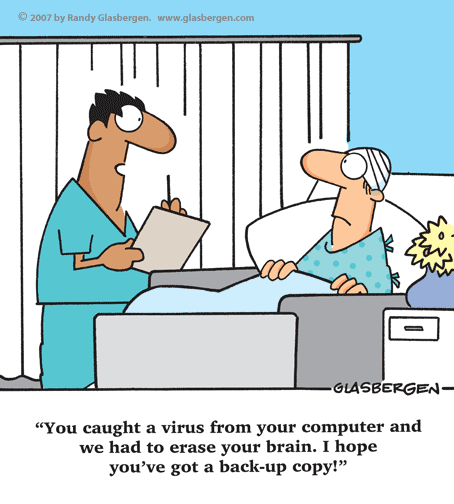
Picture source:  http://www.glasbergen.com/wp-content/gallery/hospital-cartoons/hosp1.gif
Hopefully it is obvious that the above cartoon is not an actual medical diagnosis. I am using it to illustrate that most people are familiar with the diagnosis a doctor may give to a patient but not everyone is aware that information gathered during a nursing assessment is used by nurses to form nursing diagnoses (for the record the above is not a nursing diagnosis either, it is just a cartoon). Nursing diagnoses use clinical judgement from the nurse and are an important part of the nursing process. A diagnosis of this type may involve actual or potential health problems or life processes as it pertains to the patient, the patient's family or his/her community. In the case of gliomas, the following five nursing diagnoses may be experienced by brain tumor patients: 


1) Impaired memory
2) Risk for falls
3) Ineffective self-health management
4) Decreased intracranial adaptive capacity
5) Interrupted family processes

To better explain what a nursing diagnosis is, I will use the following example:

Impaired memory related to the medical diagnosis of a glioma in the left temporal lobe. 

The plan, outcome, and nursing interventions that a nurse might use would be completely dependent on the size of the tumor as well as the progression and type of treatment course for the patient. 


Sources:

Lewis, S. (2011). Medical-surgical nursing: Assessment and management of clinical problems. (8th ed.). St. Louis, Mo.: Elsevier/Mosby.

What is Nursing Diagnosis And Why Should I Care? (2015, January 1). Retrieved March 2, 2015, from http://www.nanda.org/What-is-Nursing-Diagnosis-And-Why-Should-I-Care_b_2.html

Saturday, February 28, 2015

Nursing Care for the Patient

When caring for an individual who has been diagnosed with a glioma, a nurse provides care dependent upon the progression of the tumor. A patient may require care ranging from post-surgery care after the resection of the tumor to palliative care when no other treatment is suitable for the patient. Just how treatment and outcome depend on the location and size of the glioma, the care that a patient may require is also dependent on the characteristics of the tumor. Extra assistance with mobility or completing activities of daily living (ADLs) are most likely tasks when the nurse will assist the patient. ADLs include everyday tasks like bathing, grooming (brushing hair, brushing teeth), getting dressed, eating, and using the bathroom. When it comes to doing a nursing assessment, it would most likely be directed specifically on a patient's neurological status because the brain is the affected organ. Changes in cognition, memory, movement, sight and a variety of other functions regulated by that brain may be affected by the presence of a glioma so a nurse will assess neurological function and provide care accordingly.


Thursday, February 12, 2015

Treatment Options

Typically, a medical oncologist will review the medical history of a patient with a brain tumor and perform a full diagnostic evaluation. Treatment plans are then based on the patient's specific diagnosis. The decision of which treatment is most appropriate involves an entire neurosurgery team for the patient including: a neurosurgeon, pathologist, radiation oncologist, medical oncologist, psychologist, rehabilitation therapist and other cancer experts across a variety of disciplines.

The following therapies are treatment options that may be used depending on the type, size and location of the tumor:
  • Surgery
  • Immunotherapy
    • Patients who are battling cancer are usually considered to be immunocompromised 
    • This therapy uses the body's immune system to fight cancer in a special way. Learn more
  • Chemotherapy
    • Involves the use of anticancer drugs to stop or slow the growth of cancerous cells in the body
    • More information regarding the different types of chemotherapy and how it may be administered may be found here.
  • Radiation
    • Uses energy which is targeted to a specific area to shrink tumors
    • Click here for more information and to learn about the different types of radiation
  • Gamma Knife Stereotactic Radiosurgery
    • A non-invasive surgery option compared to traditional neurosurgery
    • Does not use a knife, drugs or weeks of radiation so it is easier for patients to return to everyday living
Therapies may be used alone, or in combination with  one another.

The Cancer Treatment Center reports these common side effects during treatment:
  • Nausea
  • Hair loss
  • Vomiting
  • Diarrhea
  • Increased risk of infection (from low white blood cell counts)
  • Fatigue (from low red blood cell counts)
  • Easy bruising and bleeding (from low blood platelet counts)
A patient's health care team will work with them during treatment. The care team will monitor pertinent blood labs and help manage side effects from the treatment. One of the main goals is to maintain the best quality of living possible while the patient is enduring difficult cancer treatments.

Sources:
Gamma Knife. (n.d.). Retrieved February 13, 2015, from http://www.legacyhealth.org/health-services-and-information/health-services/for-adults-a-z/cancer/all-cancer-services/radiation-oncology/gamma-knife.aspx

How we treat cancer. (2014, January 1). Retrieved February 13, 2015, from http://www.cancercenter.com/how-ctca-treats-cancer/


Saturday, February 7, 2015

Headache? Fatigue? Depression? Maybe It's A Brain Tumor

Let's use an example: Say someone you know is experiencing the following symptoms: headache, fatigue and depression. What is your first guess? Maybe something like stress or a significant life event (death of a loved one, divorce, job loss, etc) was the root cause? My initial thoughts would probably be similar and I would not show an immediate cause for concern. However, these symptoms may actually be something serious.

MAYBE these symptoms are caused by a brain tumor. Depending on the size and location of a glioma the most common symptoms may include any of the following:
    • Headaches
    • Seizures
    • Sensory (touch) and motor (movement control) loss
    • Deep venous thrombosis (DVT, or blood clot)
    • Hearing loss
    • Vision loss
    • Fatigue
    • Depression
    • Behavioral and cognitive (thinking) changes
    • Endocrine dysfunction (hormone/gland changes)
Gliomas may present as one or more of these symptoms which may make an early diagnosis difficult. Specifically, headaches, fatigue, depression, and endocrine dysfunction may all be related to other diseases. Therefore, brain tumors may go unnoticed until they grow to be a larger size and/or cause more troubling symptoms like seizures. hearing or vision loss, or even loss of sensory and motor function. 

Of course, experiencing any of the above may  contribute to reasons why a patient may seek care but the most obvious would be those "troubling symptoms" that I listed. If someone is experiencing an unusual amount of fatigue or has a new onset of depression, it would be a good idea to seek advice from a health care provider. Also, headaches which occur most frequently in the morning upon waking, would be something else to mention to a health care provider. 


Sources:

Brain Tumor Symptoms. (2014, January 1). Retrieved February 7, 2015, from http://www.abta.org/brain-tumor-information/symptoms/

Saturday, January 31, 2015

Diagnosis: Brain Tumor

The diagnosis of a brain tumor is somewhat complicated. There are many things taken into consideration before a diagnosis and many tests are run to rule out other possibilities. According to Medical-Surgical Nursing, "New onset of seizures or adult-onset migraines may be indicative of a brain tumor and should be investigated" (1377). Upon investigation of such symptoms, a person may have the following diagnostic tests ordered: Magnetic resonance imaging (MRI), positron emission tomography (PET) scan, or a computed tomography (CT) scan. Each of these scans serves a different purpose in the diagnostic process but simply put, they help in distinguishing the location and size of the tumor. Obtaining actual brain tissue from the tumor will allow for a histologic study so that a correct diagnosis of the brain tumor may be made.

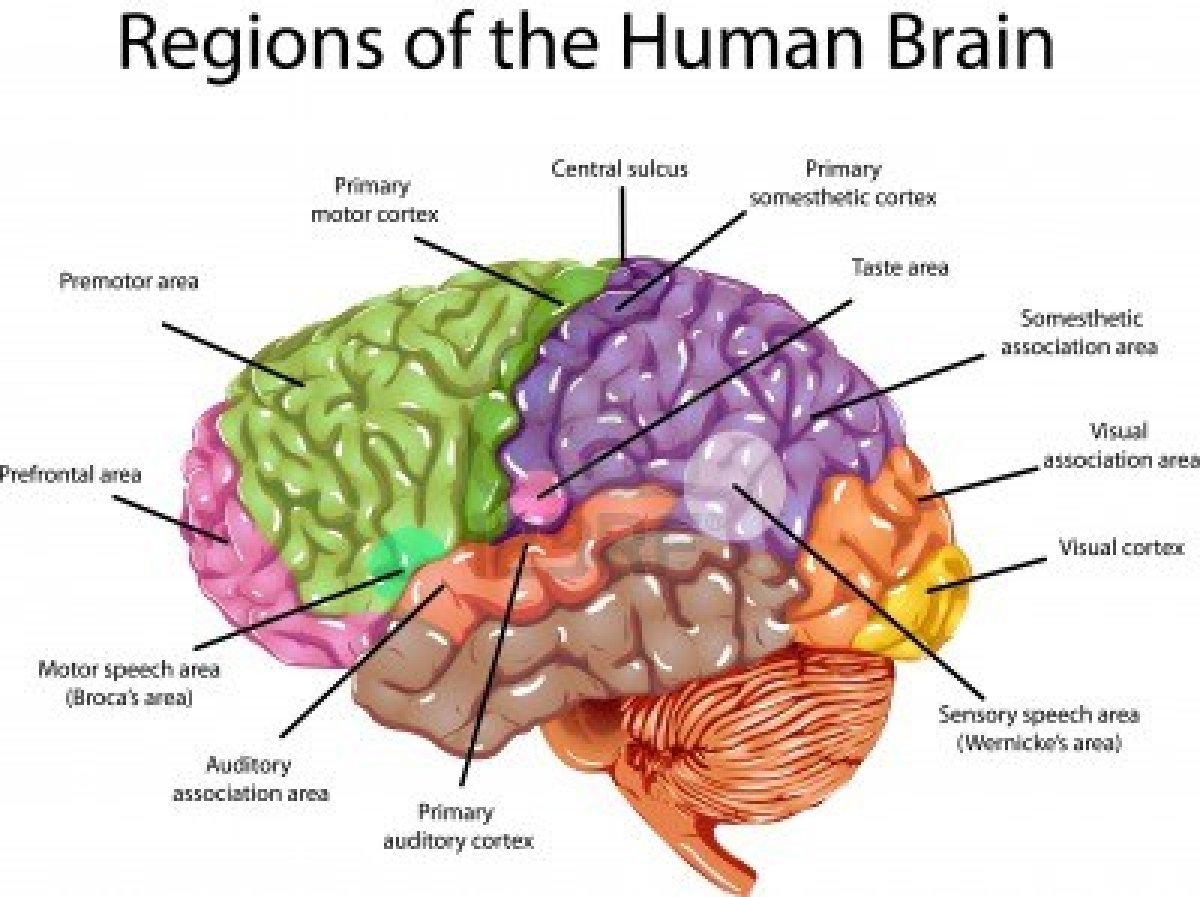
As previously discussed, tumors are named for the tissue they originate from. Gliomas are tumors made from glial cells. Most likely, a neurosurgeon will obtain brain tissue during surgery to make an accurate diagnosis and to guide treatment options. Size and location of a tumor are important factors when learning how the brain may be affected by a glioma. Please check out the pictures below for a better understanding.


Each area of the brain is color-coded.
If a tumor were to form, the corresponding functions would be affected.
Source: www.abovetopsecret.com


This model shows how sensory and motor (movement) would be affected.
Keep this in mind: if a tumor forms on the left side of the brain, the right side of
the body will experience sensory and/or motor deficits.
Source: https://classconnection.s3.amazonaws.com/917/flashcards/770260/png/homunculus.png


In the case of gliomas, the progression of disease is quite dismal. Most gliomas are considered to be malignant and therefore patients do not usually have a favorable outcome. Again, it is dependent upon the location, size and type of brain tumor. Recall that gliomas can be any of these types: astrocytoma, glioblastoma multiforme, oligodendroglioma, ependymoma or medulloblastoma; all of which are malignant except the oligodendroglioma (benign tumor). Medical-Surgical Nursing reports a 5-year survival rate after the diagnosis of a primary brain tumor (1375).


Sources:

Homunculus: https://classconnection.s3.amazonaws.com/917/flashcards/770260/png/homunculus.png

Lewis, S., Dirksen, S., Heitkemper, M., & Bucher, L. (2014). Nervous System. In Medical-Surgical Nursing: Assessment and Management of Clinical Problems (9th ed., p. 1377). St. Louis: Elsevier Mosby.

Regions of the Human Brain: www.abovetopsecret.com

Saturday, January 24, 2015

Growing Gliomas

Understanding how a tumor develops is the closet one can get to understanding the how a glioma is formed. The etiology (cause) of this cancer is actually poorly understood and therefore there is not much information that I can use to help explain the "why" of glioma growth in the brain. As discussed in a previous post, tumors develop because of abnormal cell growth. New cells form when they are not needed or older cells do not die as planned. The accumulation of these cells is what makes up the tumor. Simply put, a glioma is a tumor. Although the cause for gliomas is largely unknown, certain genetic risk factors and radiation exposure may play a role in their formation and progression.

The video below is a visual that provides information on the causes, symptoms, and treatment of brain tumors. Although the video focuses on brain tumors in general, it is accurate and easy to understand.


Sources:

Brain Tumor-Brain Cancer-Causes and Symptoms-Brain Tumors-Metastatic-DiagnosisSurgery-Teraphy. (2013, December 8). Retrieved January 23, 2015, from https://www.youtube.com/watch?v=8HUTDs2q4Tk

Brain tumor - primary - adults: MedlinePlus Medical Encyclopedia. (2013, October 30). Retrieved January 23, 2015, from http://www.nlm.nih.gov/medlineplus/ency/article/007222.htm

Dr. Bruce, J. (2014, May 2). Glioblastoma Multiforme . Retrieved January 25, 2015, from http://emedicine.medscape.com/article/283252-overview


Saturday, January 17, 2015

Who Will Develop A Glioma?

From what I can tell, the etiology of gliomas is poorly understood and therefore epidemiology information is hard to find. However, I was able to find a couple of articles that may shine some light on the likeliness of a certain population developing gliomas in the United States. If you are still trying to understand what a glioma is then please first read this information from the American Brain Tumor Association.

Once you have a better grasp on the basics to understanding this complicated brain tumor, check out studies that will better help you understand certain risk factors like melanoma and the populations that may be affected. Viewing the above links will help you gain more insight into just how serious gliomas may be and what factors (hereditary, environmental, lifestyle, etc.) may increase risk of developing a primary brain tumor in the United States.


If you find this interesting, visit this site to see the original map and other graphs

Saturday, January 10, 2015

Tumors: Benign vs. Malignant

Let's just cut to the chase. A glioma is an incredibly serious brain tumor diagnosis. Sure, you're probably thinking, "When isn't a tumor diagnosis serious?" In fact, it is possible to have a tumor diagnosis elsewhere on the body without having an immediate cause for alarm. In such a case this may mean that the tumor is considered to be benign. What does benign mean? Let's take a step back for a moment to define a few terms.
A tumor is defined as an abnormal growth of body tissue and is further categorized as being either benign (noncancerous) or malignant (cancerous). This abnormal growth occurs when there is a problem with the normal process of new cell formation and cell death. Normally cells die after their appropriate life span and new cells replace them. Unfortunately, sometimes this process does not go as planned. New cells begin to form when they are not needed or cells do not die when they should. This buildup of cells is what defines the abnormal growth of body tissue. As an example, finding a benign tumor in breast tissue would be less worrisome than finding a malignant tumor in the same area. This is true for most parts of the body except in cases where the tumor grows in or around a vital organ. In the case of gliomas, we are specifically referring to the brain.
Keeping that in mind, let’s distinguish one more thing related to tumors: Benign tumors are considered to be slow growing and do not usually invade surrounding tissue making their surgical removal much easier. Whereas, malignant tumors are fast growing and are more invasive making it harder to remove tumor completely during surgery. So if the brain starts forming new cells although they are not needed and a BENIGN tumor develops, everything will be hunky dory, right? Wrong. Benign brain tumors can be considered malignant depending on their location in the brain. That being said, ANY tumor in the brain (benign or malignant) is going to cause problems and will not be considered “easier” to remove during surgery.
Now that we have a basic understanding of tumors, let’s define what it means to have a glioma. These kinds of tumors are considered to be primary brain tumors which means that they originate within the brain. Specifically, these tumors are formed from glial cells in the brain (the "gli-" portion of the term; "-oma" translates to "tumor"). It is rare for malignant primary brain tumors to spread to other parts of the body but the brain damage that can result is overwhelming.
There is a long list of symptoms that may be caused by the tumor or may result from the removal of the tumor some of them are: headache, nausea/vomiting, speech problems, vision loss, seizures, memory loss, mood or personality changes, hearing loss, and problems with balance and coordination. Initial treatment may include removal of the glioma with surgery (craniotomy). Another option or to continue treatment, depending on the location of the tumor, a patient may undergo radiation or chemotherapy treatments if the glioma was found to be malignant. These problems will most likely also involve rehabilitation therapies like physical therapy, occupational therapy, and speech therapy depending on the degree of disability as a result of the tumor.